Chikit.AI
Healthcare workflows were broken. We didn't just design a dashboard—we engineered a new clinical operating system.
of a doctor's time was spent treating typing.
We interviewed 40+ clinicians. Their biggest complaint wasn't the patients; it was the fragmented software that forced them to be data-entry clerks rather than healers. The solution required extreme empathy and zero-friction UX.
The Trust Deficit
AI is a black box. Doctors refuse to sign off on AI-generated summaries if they can't trace how the AI reached its conclusion. We engineered extreme transparency.
Role Fragmentation
A nurse's workflow is vastly different from a billing admin's. The UI needed to seamlessly mutate based on the logged-in role without losing familiarity.
Environment Chaos
Clinics are loud, fast-paced, and use outdated hardware. The design had to be high-contrast, large-touch-target optimized, and completely lighting-agnostic.
The ecosystem of care.
Conversational Triage
An empathetic AI interface that speaks to patients in their native tongue before they even see the doctor. Captures symptoms naturally.
Smart Doc Analysis
Upload a messy handwritten prescription, get structured data instantly via tailored RAG pipelines.
Autonomous Discharge
One-click summaries combining vitals, notes, and AI-compiled care plans.
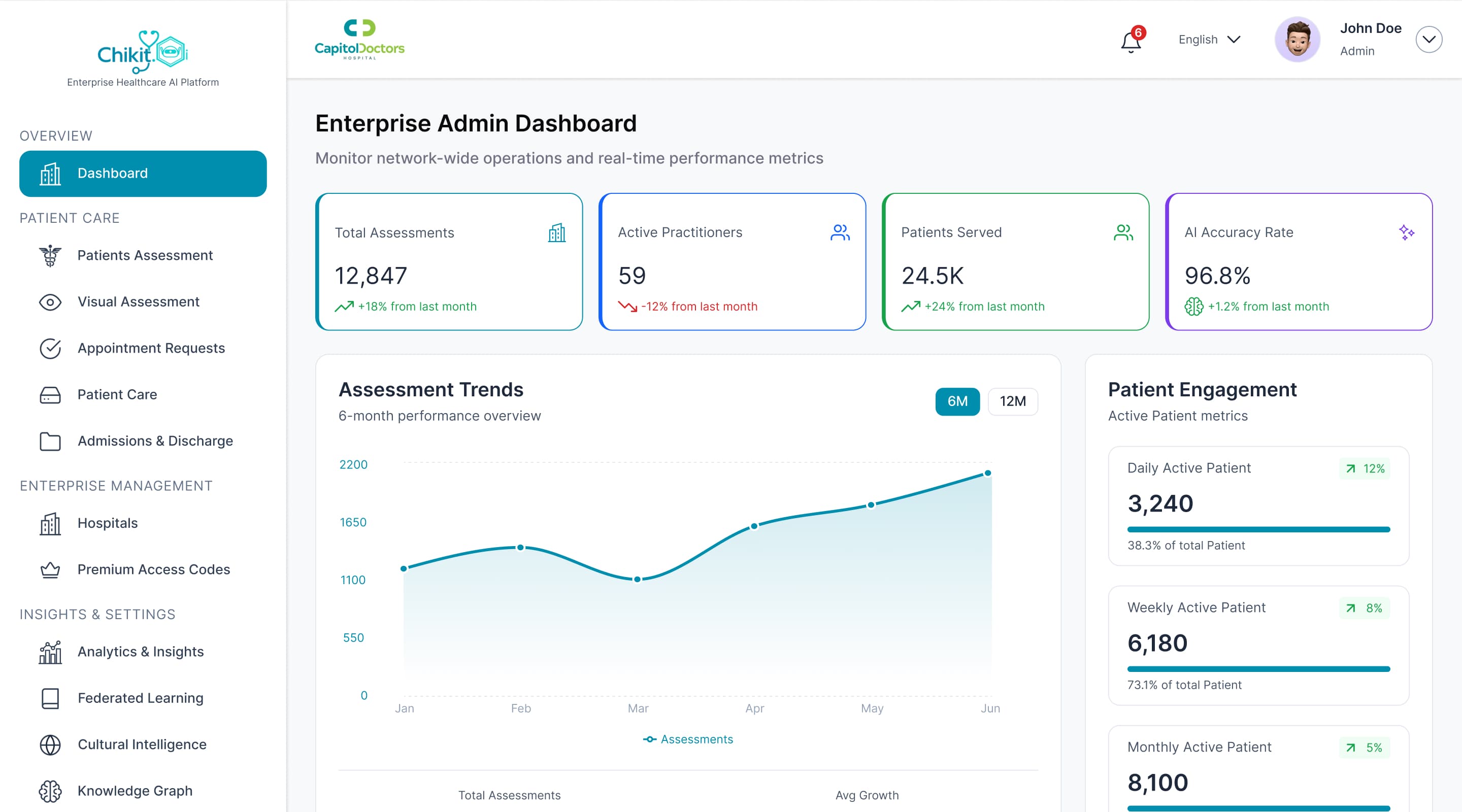
Command Center
A bird's eye view for Super Admins to monitor clinical throughput, revenue, and system health across multiple branches.
Experience the Dashboard
The clinic in your pocket. Native-feeling PWA.
Doctors are rarely chained to their desks. We built a Progressive Web App that delivers the full power of the clinical OS directly to their mobile devices, bypassing the friction of App Store approvals while maintaining native-level performance.
Offline Resilience
Designed to cache critical patient data, allowing doctors to review notes even in hospital dead zones.
Push Notifications
Real-time alerts for critical lab results and emergency triage escalations.
Camera Integration
Direct hardware access for instantly scanning handwritten prescriptions into the RAG pipeline.
Returning time to those who save lives.
Reduction in patient onboarding time via AI triage.
Saved per consultation through automated discharge.
Entire clinical platform delivered in under 6 months.